
Editorial Staff | XcruitEnergy | Tuesday, August 04, 2026 | 12:00 PM UTC
1. Grid Modernization, Electrification & Battery Storage Trades

Technician assembling a large blue industrial battery array with a power tool. (Source: Pexels)
The humble electrician is becoming energy's scarcest asset. In the United States, grid modernization employment has climbed 23% since 2020 to more than 168,000 workers, yet 76% of employers still report difficulty filling roles. Government projections show electrician employment growing 9% between 2024 and 2034, with roughly 81,000 openings a year. Nvidia's CEO has said the AI infrastructure buildout alone will need electricians in the hundreds of thousands. Layer on the battery boom global lithium-ion demand is forecast to reach 4,700 gigawatt-hours by 2030, more than six times 2022 levels and this trade has quietly become one of energy's highest-paying specializations wherever construction races to keep pace with renewables and AI infrastructure alike.
2. Nuclear & SMR Engineering

Massive concrete nuclear cooling towers against a blue sky. (Source: Pexels)
Nuclear is staging its biggest hiring push in a generation. The US nuclear workforce needs to nearly quadruple by 2050, as roughly 40% of today's nuclear workers approach retirement within the decade. In Texas alone, announced projects will require more than 10,000 skilled workers by the early 2030s. The UK's nuclear workforce, currently around 96,000, is targeting 120,000 by 2030 to meet its build programme. IEA data already shows nuclear retirements outpacing new entrants by a 1.7-to-1 ratio. Small modular reactors add a further twist: they cut on-site construction labor but demand entirely new skill sets that current training systems largely do not provide.
3. Carbon Capture, Utilisation & Storage (CCUS) and Hydrogen Engineering

Low-angle view of tall, vertical industrial gas columns and silos. (Source: Pexels)
CCUS has moved from pilot projects to industrial-scale build-out. The UK expects the sector's direct roles to peak at up to 15,000 in a single year by 2030. US employment projections for the sector range from 14,000 to as many as 100,000 workers by 2030 depending on policy, with demand concentrated in geoscience, welding, pipefitting, and process engineering. The UK's own carbon-storage targets of 20 to 30 million tonnes a year are expected to support 50,000 jobs, much of it tied to clean hydrogen production running alongside capture infrastructure.
4. AI Data Center Power Infrastructure Engineering

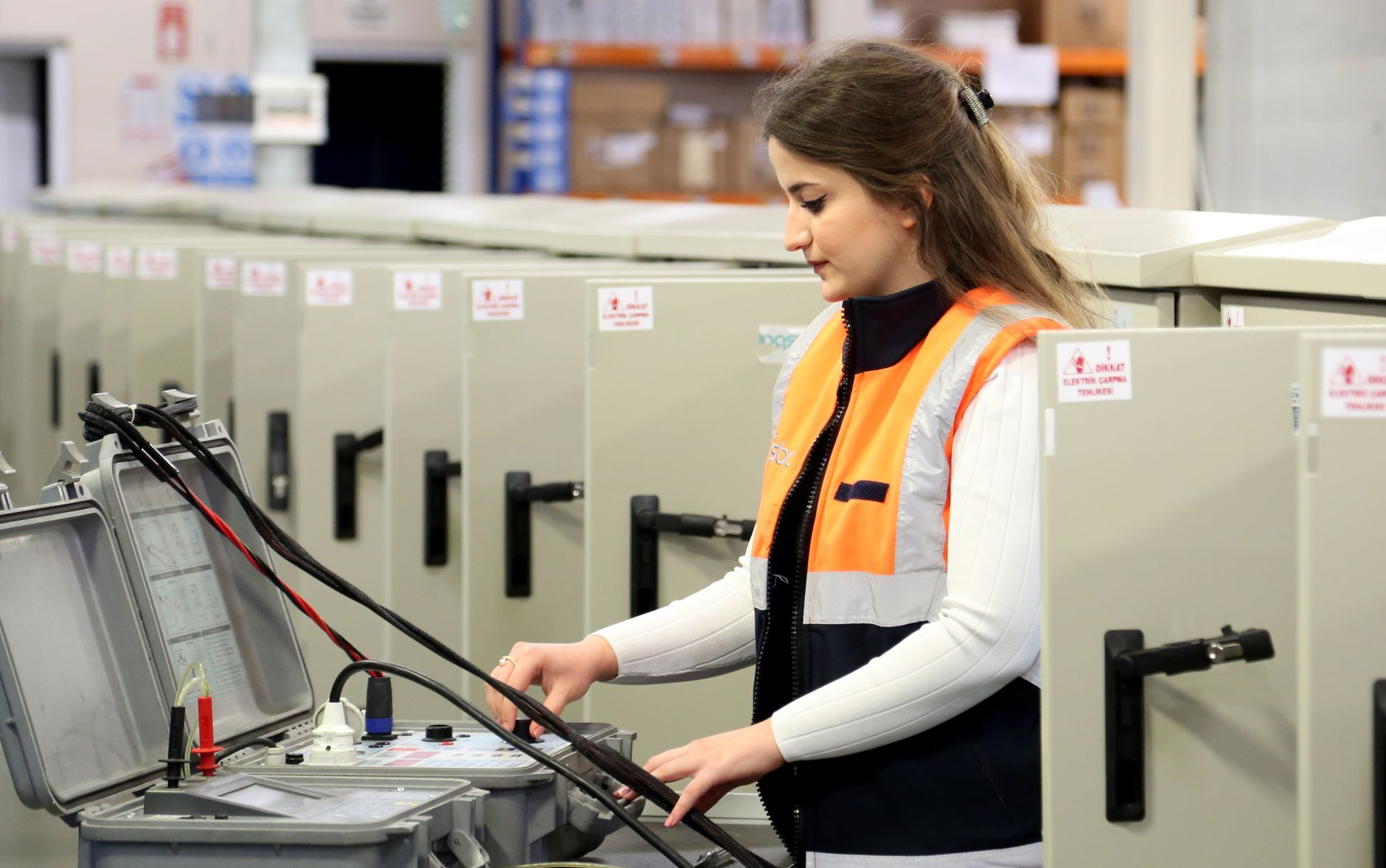
Power Panels (Source: Pexels: Last accessed August 4th, 2026)
AI has turned power engineering into a data-center specialty of its own. Deloitte projects US data center power demand will jump from 47 gigawatts in 2025 to more than 176 gigawatts by 2035. Globally, the sector is expanding roughly 14% a year through 2030, and grid-connection wait times in primary markets now exceed four years, according to JLL. The result: a scramble for power and cooling engineers, with roughly 340,000 data center roles unfilled in the US alone as of early 2026.
5. Operational Technology (OT) and Industrial Cybersecurity

Cybersecurity specialist with a laptop standing in front of industrial server racks. (Source: Pexels: Last Accessed: August 4th, 2026)
The industry's most dangerous skills gap may be invisible. Attacks on operational technology sites with physical consequences rose 146% year over year, according to Waterfall Security. A 2026 SANS survey found skills gaps have overtaken headcount shortages as the industry's top workforce concern for the first time in the report's three-year history, cited by 60% of organizations versus 40% citing staffing levels. The problem is acute in the Gulf, where OT/ICS security is described as a "Venn diagram" role — deep industrial-engineering knowledge paired with cybersecurity expertise — that almost no training pipeline produces at scale.
6. Renewable Energy Project Development & Technicians

Engineer and a technician inspecting a solar panel farm. (Source: Pexels)
Renewables remain the single biggest job engine in energy. Global employment in the sector rose to 16.2 million in 2023, up from 13.7 million a year earlier, according to the International Labour Organisation. The IEA projects clean energy jobs will outpace fossil fuel jobs by 2030, and in its net-zero pathway the agency estimates 30 million new clean energy jobs will be created by 2030 against roughly 13 million fossil-fuel roles at risk.
7. AI and Digital Twin Literacy Across Energy Operations

Overlay of digital code and data streams across a developer's profile. (Source: Pexels: Accessed: August 4th, 2026)
Artificial intelligence is no longer a specialist add-on; it's becoming a baseline requirement across engineering, operations, and trading desks alike. Generative AI alone could add $21 billion to $35 billion a year to the GCC economy, according to McKinsey research. Regionally, PwC Middle East expects AI to contribute up to $320 billion to the GCC economy by 2030. Oil and gas operators are increasingly hiring for agentic AI, digital twins, and predictive-maintenance roles that replace manual inspection with continuous monitoring, and utilities are hiring AI-literate engineers who can forecast the demand patterns AI infrastructure creates on local grids.
8. ESG, Carbon Accounting & Sustainable Finance

Open laptop displaying an interactive analytics dashboard and charts. (Source: Pexels: Accessed: August 4th, 2026)
Sustainability has moved from a side function into a core hiring category. Global green-talent demand is now outpacing supply at nearly two to one, and by 2030 one in five jobs may lack the green skills needed to fill them. ESG-related job postings rose 26% in a single year, and sustainable-finance postings climbed 29% worldwide as more than $40 trillion in ESG-aligned assets now sit under management. The International Labour Organisation projects the broader climate-policy shift will create 24 million new jobs globally by 2030.
9. Cross-Sector Workforce Mobility

Silhouettes of commuters walking through a modern transit terminal. (Source: Pexels: Accessed: August 4th, 2026)
One of the fastest ways into energy's highest-demand roles doesn't start in energy at all. Nuclear recruiters are actively courting oil and gas veterans, since core skills like welding, piping, and instrumentation transition seamlessly between the two industries. CCUS employers report the same pattern, drawing on transferable expertise from oil and gas, petrochemicals, and environmental consulting to staff up faster than dedicated training programs can produce graduates. For mid-career professionals in the GCC's mature oil and gas workforce, this cross-training pathway may be the fastest route into nuclear, hydrogen, or carbon-management careers.
10. GCC Sovereign AI & Digital Infrastructure Talent

Elevated metro rail line leading toward modern Gulf city skyscrapers. (Source: Pexels: Accessed: August 4th, 2026)
Nowhere is the digital-energy convergence sharper than in the Gulf. The GCC's AI market reached $5.4 billion in 2024 and is projected to hit $22.4 billion by 2033. Regional recruiters report that 90% of GCC employers faced skills gaps in 2025, and the region is expected to add more than 5 million new private-sector jobs by 2030, with 45% to 75% of employers already struggling to find qualified talent. AI engineers, data scientists, cloud architects, and cybersecurity specialists sit at the top of that list — skills increasingly demanded alongside, not instead of, traditional energy engineering credentials.
Frequently Asked Questions
Why is the energy sector short-staffed despite record hiring?
To prevent the skills gap from widening by 2030, the number of new qualified entrants needs to rise 40% globally, requiring about $2.6 billion a year in additional training investment, according to the IEA.
Which energy trade offers the best near-term salary premium?
Electricians with battery-storage and EV-charging certifications, particularly given warnings that the AI buildout alone could need electricians in the hundreds of thousands.
Is nuclear engineering a realistic career pivot from oil and gas?
Yes. Nuclear recruiters are actively targeting oil and gas veterans because skills like welding, piping, and instrumentation transition seamlessly between the sectors.
How big could the CCUS skills gap get?
UK CCS roles alone could peak at 15,000 in a single year by 2030, while broader US estimates run as high as 100,000.
Why are data centres suddenly competing with utilities for talent?
Because they need the same power engineers. Deloitte tracks the overlap directly as US data-center power demand nearly quadruples by 2035.
What's the biggest blind spot in energy cybersecurity hiring?
Operational technology. OT-focused attacks with physical consequences jumped 146% year over year, yet few professionals combine industrial-control knowledge with cyber expertise.
Are renewable energy jobs still growing faster than fossil fuel jobs?
Yes. The IEA's net-zero pathway projects 30 million new clean energy jobs by 2030 against roughly 13 million fossil-fuel jobs at risk.
What ESG or sustainability skills are employers actually paying for?
Carbon accounting, GRI/SASB reporting, and climate-risk assessment top most lists, with ESG job postings up 26% in a single year.
How exposed is the GCC to this talent shortage?
Heavily. 90% of GCC employers reported skills gaps in 2025, even as the region plans to add more than 5 million private-sector jobs by 2030.
Do these careers require a four-year degree?
Not necessarily. Applied technical roles — electricians, pipefitters, plant operators, nuclear technicians — already account for over half of the entire global energy workforce.
What's driving nuclear's workforce crunch specifically?
An aging workforce retiring faster than replacements arrive. In advanced economies, 2.4 energy workers are nearing retirement for every entrant under 25, with nuclear retirements outpacing new entrants 1.7 to 1.
Will AI eliminate energy jobs or create them?
Both, unevenly. It's displacing some routine inspection work while creating roles in digital twins, predictive maintenance, and grid forecasting, with generative AI alone projected to add $21–35 billion a year to the GCC economy.
Sources used:
- IEA – Energy employment has surged, but growing skills shortages threaten future momentum
- IEA – World Energy Employment 2025, Executive Summary
- IEA – Clean technologies are driving job growth in the energy sector
- Hydrocarbon Engineering – Energy employment has surged, but growing skills shortages threaten future momentum
- The Renewable Energy Institute – Closing the Green Skills Gap
- Global Edge Group – Why the Nuclear Industry Is Facing a Generational Workforce Shortage
- iRecruit – Nuclear Power Talent Shortage 2026: SMR & AI Workforce Gap
- University of Texas at Austin – Cultivating Homegrown Nuclear Talent in Texas (PDF)
- Astute People – UK Nuclear Skills Gap: What the SMR Export Wins Reveal
- I2EN – Workforce Development, Training and Education for SMRs
- CCSA – New Report on Green Jobs and Carbon Capture & Storage
- SERC Carleton College – Outlook for Emerging Energy and Sustainability Jobs
- Ofgem – Carbon capture and clean hydrogen technology will drive growth and jobs on Humberside
- Worldwide Recruitment Solutions – Carbon Capture Projects and Carbon Capture Jobs
- ABLEMKR – Grid Modernization Workforce Trends 2025
- ABLEMKR – The State of Skilled Labor in Electrical 2026
- Qmerit – America's Electrician Shortage in 2026
- EIT InnoEnergy Skills Institute – Powering the Transition to Net Zero Economies (PDF)
- Deloitte – Data centers, power companies compete for workforce
- Alpha Apex Group – Top 10 Data Center Roles in High Demand in 2026
- Elevation Proving Grounds – Data Center Recruiting: Navigating 4-Year Grid Delays & AI Density
- Metaintro – AI Data Centers Are Creating Thousands of Jobs
- News4Hackers – Energy Sector OT Cybersecurity Talent Crisis: Retiring Faster Than Replaced
- Industrial Cyber – SANS 2026 Report Flags Cybersecurity Skills Crisis
- AIQU Solutions – OT and ICS Security Hiring in the Gulf Energy Sector
- GCC AI & Digital Oil & Gas Conference 2026
- EIN Presswire – ReqReadyAI Expands into the Middle East's GCC Region to Bridge Critical AI Skills Gap
- LHH – How GCC Industries Are Shaping the Future in 2026
- The GCC Edge – Reskilling Toward AI in the Gulf: Who Leads, Who Lags
- People Connect Global – UAE & GCC Hiring Outlook 2025-2026
- 365Talents – Green Skills Guide: Lead the Sustainability Transformation 2026
- EnableGreen – Inspiring ESG Jobs
- EnableGreen – Breaking Ground in Sustainable Finance Jobs
- The Interview Guys – The Green Skills Revolution
